First published by Spéis” the online journal for the ICTM (Irish Council for Traditional Music)
And’Art Festival and Residency, Terre Sans Frontiéres 2010
It was an enriching and enlivening experience for me working with the other musicians at And’Art, and I was delighted that my composition “Lost In Marrakech” was chosen to reflect the theme of the residency in concert at The Theatre Royale Marrakech.
And’Art is an international festival and residency involving both visual artists and musicians
taking place in Morocco. I asked the founders of Terre Sans Frontière, Saad Edine Said
and Amy Smyth, to explain their philosophy.
“Terre Sans Frontière is a not-for-profit organisation promoting cultural relations between
Morocco, the UK, and Internationally. We do this by building and fostering cultural
collaborations across the arts, music and film, initiating, promoting and assisting the
exchange of skills, creativity and partnerships between Artists and Musicians from all over
the world which explore the benefits of the symbiotic relationship between the endemic
environment of people, the setting and their experience.
And’Art promotes the value of art in different cities across Morocco, to enhance social
development with young people, assist artists in realizing their artistic ambition and extend
their experiences. We aim to bring cultures together to increase a better understanding
of each other. In its first edition, And’Art toured the Southern Saharian region of Zagora,
whilst the second edition took place in the port city of Tangier, known for its creative
community. And’Art relies on the dedication of International Artists committed to breaking
down cultural boundaries.”
The theme of this year’s collaboration was two-fold; storytelling as the city is famous
for its storytellers, and the idea of “desert meets mountains” inspired by the immediate
geography of Marrakech lying as it does at the foot of the snow-capped Atlas mountains.
Having been invited to each year’s event, I finally made it to Marrakech, (the “red city”-
by statute red stone is the prescribed building material.) The musical relationships which
resulted proved inspiring and far-reaching.
Musically the collaboration involved Moroccan and European artists working together on
original composition, traditional Moroccan Gnawa music and Rap (with Rap artists from
the Moroccan underground scene and Britain.) The two weeks of collaboration culminated
in a concert at the Theatre Royale Marrakech.
The Morrocan artists involved were Saad-Eddine Said – a guitarist/ukele player and
composer. He is the co- founder and co-director of Terre Sans Frontiere.
Koman N. House -an active member of the Moroccan music and art scene. Koman’s
musical compositions regularly feature on Moroccan television and he has performed in
various art festivals across Morocco.
Lemgadder Saad Philosof – an emerging rapper based in Casablanca. He is working
alongside Koman, developing a musical dialogue spanning the different generations of
rap.
Taoufiq Damir is a percussionist based in Marrakech. He is one of the best in his
generation, specialising in traditional Arabic music as well as contemporary percussion.
Moroccan Singer Omar Benasila – Omar works and lives in Korea. After leaving Morocco
in 2006, he travelled to Thailand in order to expand his musical knowledge and fuse
Moroccan music with other traditional styles. After settling in Seoul, Korea, he formed his
band SuriSuri MahaSuri.
Mohamed Errebbaa is a traditional Gnawa musician based in Casablanca.
The European musicians were Taz Alexander(Vocals); Mohammed Yaya (MC); Tom
Oakes (traditional flute) and myself (saxophone).
As this experience was so rich and multi-layered I hope to write a more extensive article
on the musical collaborations involved, including the work of traditional flute player Tom
Oakes with the MC’s Koman, Philosof and Mohammed, and the nature and scope of Terre
Sans Frontiere. For now, though, this is necessarily a brief introduction to the nature of the
form of traditional Moroccan music known as Gnawa.
Mohamed Errebbaa is a traditional Gnawa musician based in Casablanca known as
Simo, and although we communicated easily musically, as we have no other languages in
common I asked him some questions through an interpreter. This is what he told me about
his musical tradition through the interpreter.
Gnawa originated from North & West Africa. It is relative to the American blues. It is a
traditional Moroccan music, and is characterised by the use of a musical string instrument
known as the Hajhouj and the percussion instruments called Karakb. It is normally passed
down through generations. It is traditionally known as a spiritual music that is used as
a prayer for God or for magical uses like healing. However, it is also popular genre in
Morocco. Since the end of the nineties, this music has been explored by established
musicians from all over the world.
Gnawa originated during the time when slaves were coming to Morocco from West Africa
(mostly Sudan) for trade in the rest of the world – similar to the development of the blues in
America. In the group you have one Maalam (who is the hajouj player and the singer, he is
the maestro of the group). He is traditionally the most experienced musician in the group)
The group also consists of the Karakb. This is normally from 4-12 people, who play a kind
of percussion made from iron and dance to the music. The karakb has evolved from the
chains that were used in slavery.
Through the interpreter Simo explained how he felt about the collaboration.
“He felt that this was a great experience that he would like to expand upon. He felt
honoured to share not only his music but his life experience with others. Being a Moroccan
native speaker, with limited English, he appreciated that he could communicate with
his creativity and make professional networks as well strong friendships. Therefore
the language was not a barrier. This experience gave him more confidence toward
collaborating with international musicians and different genres. Whilst asking him this
question he clearly stated ‘lets do it again’.”
I hope and believe we will…

Mohammed Errebra “Simo” playing the Hajhouj
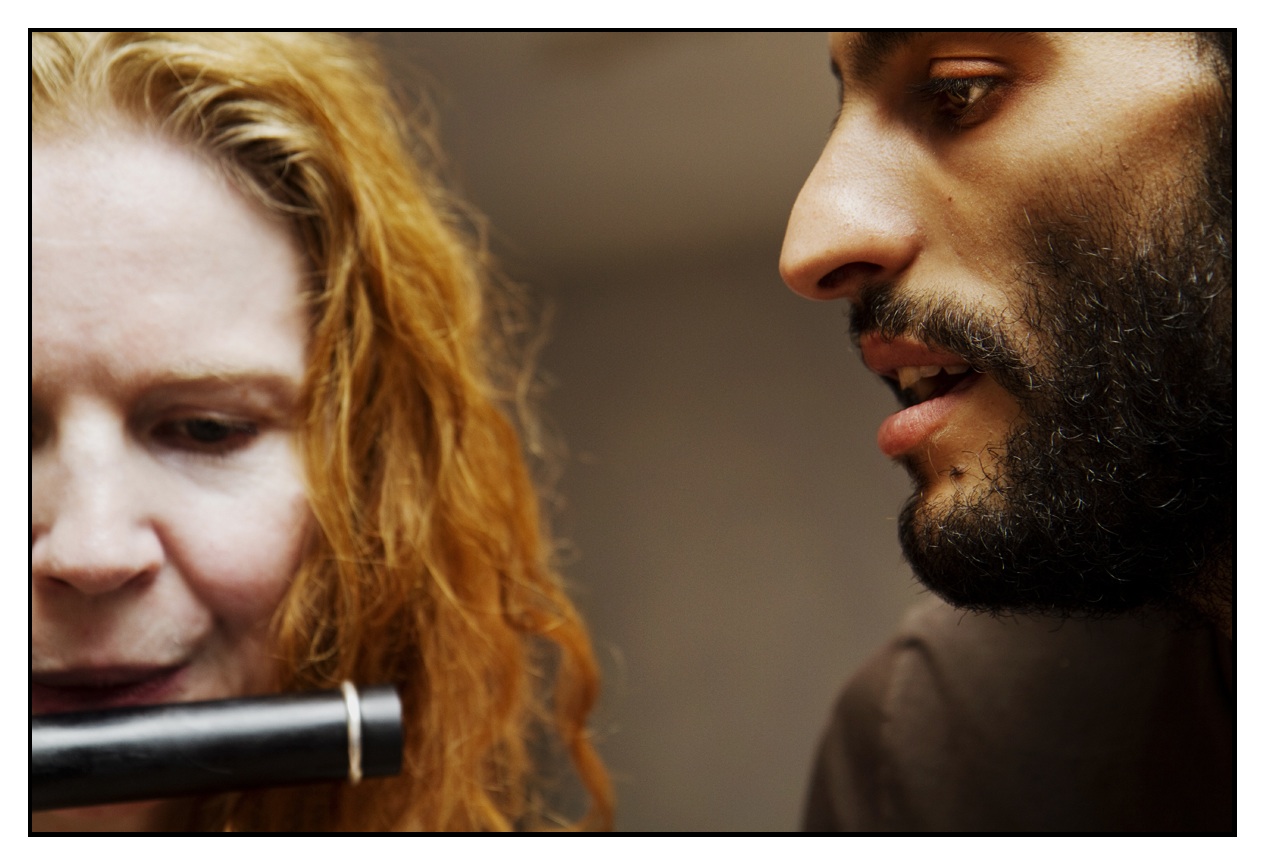
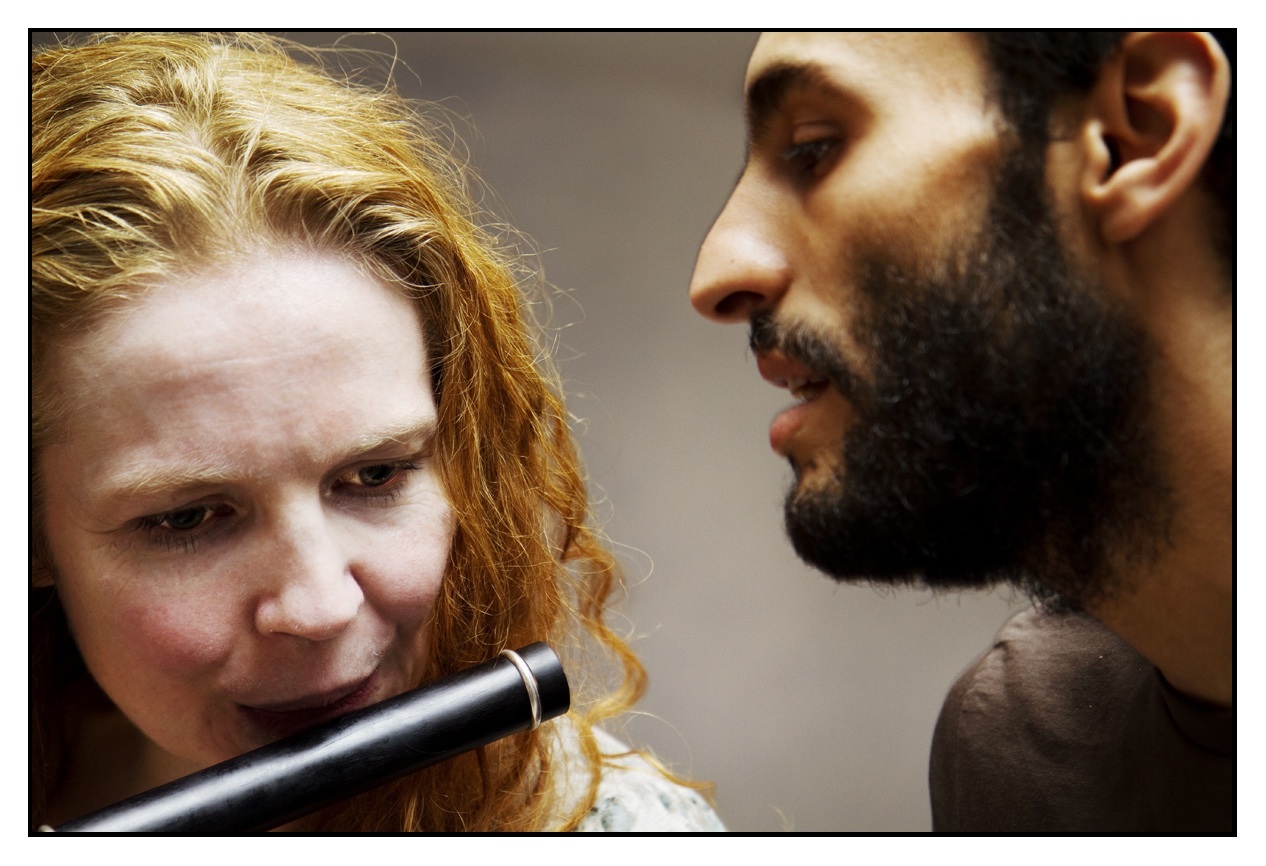
Festival dierector Saad-Edine Said
Hip-hop artist Lemgadder Saad “Philosof”
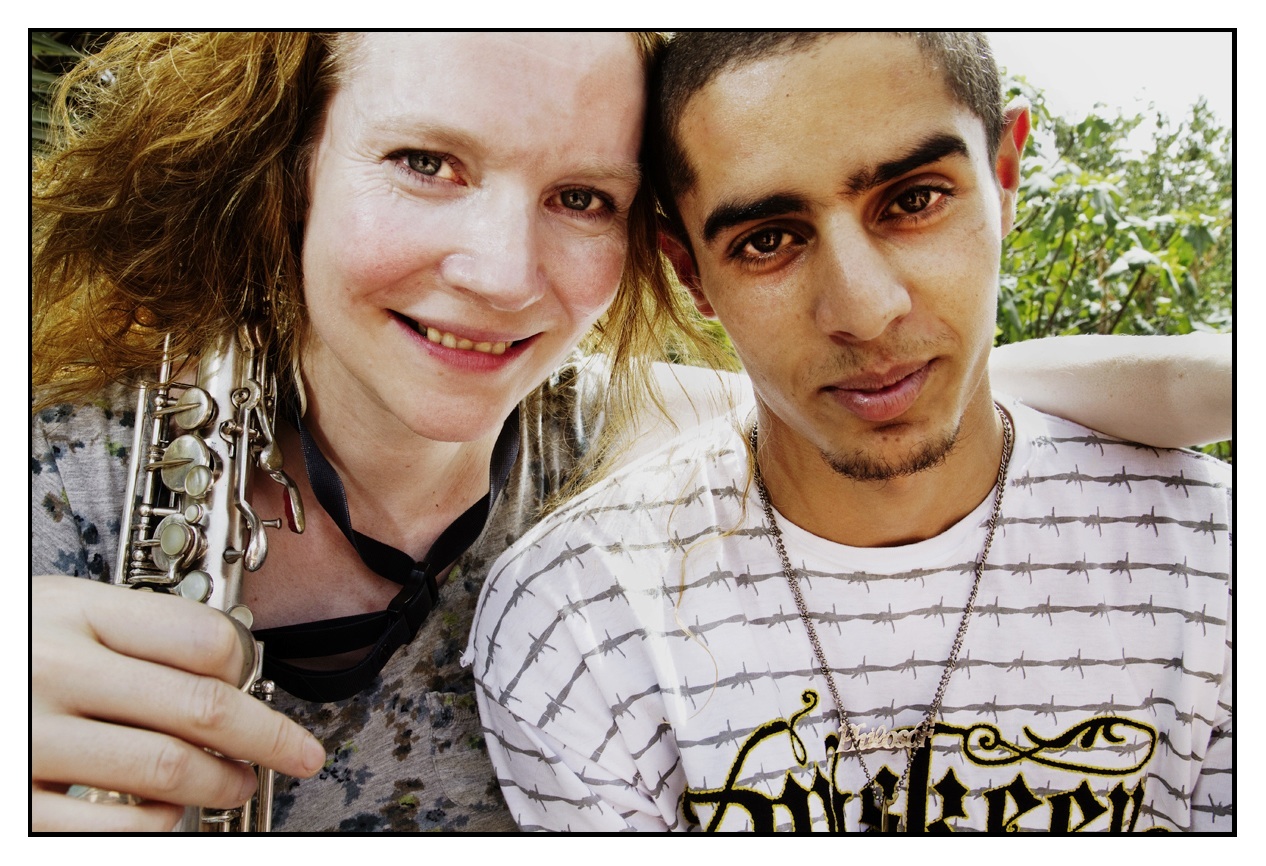
Photo credit Ambra Vernuccio
